The PowerToys Keyboard Manager enables you to redefine keys on your keyboard.
For example, you can exchange the letter A for the letter D on your keyboard. When you select the A key, a D will display.
The keyboard did not have the software disc, nor did it come with a user manual or any instructions. How do you program the usable keys and get them and the F keys to function properly. Outside of the regular keyboard functions, the rest of the keyboard keys functionality are useless. Windows 10 Depending on your hardware, you may use the Windows Logo Key + PrtScn button as a shortcut for print screen. If your device does not have the PrtScn button, you may use Fn + Windows logo key + Space Bar to take a screenshot, which can then be printed. To locate your screenshots, open File Explorer from the taskbar.
You can also exchange shortcut key combinations. For example, the shortcut key, Ctrl+C, will copy text in Microsoft Word. With PowerToys Keyboard Manager utility, you can exchange that shortcut for ⊞ Win+C). Now, ⊞ Win+C) will copy text. If you do not specify a targeted application in PowerToys Keyboard Manager, the shortcut exchange will be applied globally across Windows.
PowerToys Keyboard Manager must be enabled (with PowerToys running in the background) for remapped keys and shortcuts to be applied. If PowerToys is not running, key remapping will no longer be applied.
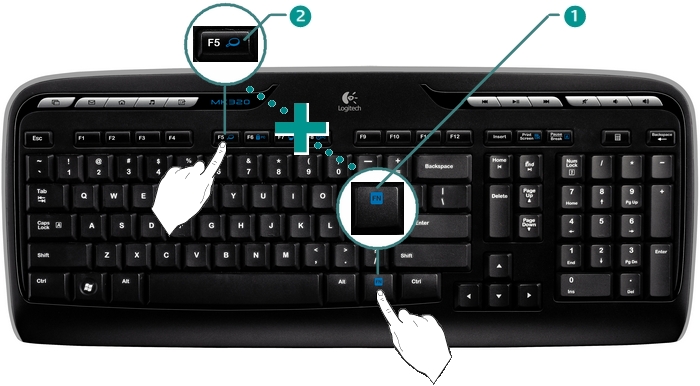
These keys are used alone or in combination with other keys to perform certain actions. The most frequently used control keys are Ctrl, Alt, the Windows logo key, and Esc. The function keys are used to perform specific tasks. They are labeled as F1, F2, F3, and so on, up to F12. The functionality of these keys differs from. The action that happens for a function key depends on the software that is active when the key is pressed. Some software or apps might have functions for the keys, while others might not. If you press a function key while using an app and nothing happens, that usually indicates that the app does not have a function programmed for that key. This is a How to Disable Function Keys on a Microsoft Wireless Media Keyboard, after much hate of the F4 key on this keyboard which kept putting my computer.
Note
There are some shortcut keys that are reserved for the operating system and cannot be replaced. Keys that cannot be remapped include:
⊞ Win+LandCtrl+Alt+Delcannot be remapped as they are reserved by the Windows OS.- The
Fn(function) key cannot be remapped (in most cases). TheF1-F12(andF13-F24) keys can be mapped. Pausewill only send a single keydown event. So mapping it against the backspace key, for instance, and pressing + holding will only delete a single character.
Settings
To create mappings with Keyboard Manager, you will need to open the PowerToys Settings (search for the PowerToys app in your Windows Start menu, selecting it will open the PowerToys Settings window). Inside PowerToys Settings, on the Keyboard Manager tab, you will see the options to:
- Launch the Remap Keyboard settings window by selecting Remap a Key
- Launch the Remap Shortcuts settings window by selecting the Remap a shortcut
Remap Keys
To remap a key, changing it to new value, launch the Remap Keyboard settings window with the Remap a Key button. When first launched, no predefined mappings will be displayed. You must select the + button to add a new remap.
Once a new remap row appears, select the key whose output you want to change in the “Key” column. Select the new key value to assign in the “Mapped To” column.
For example, if you want to press A and have B appear:
- Key: 'A'
- Mapped To: 'B'
To swap key positions between the 'A' and 'B' keys, add another remapping with:
- Key: 'B'
- Mapped To: 'A'
Key to Shortcut
To remap a key to a shortcut (combination of keys), enter the shortcut key combination in the 'Mapped To' column.
For example, if you want to select the 'C' key and have it result in 'Ctrl + V':
- Key: 'C'
- Mapped To: 'Ctrl + V'
Note
Key remapping will be maintained even if the remapped key is used in another shortcut. For example, entering the shortcut 'Alt + C' would result as 'Alt + Ctrl + V', since the C key has been remapped to 'Ctrl + V'.
Remap Shortcuts
To remap a shortcut key combination, like 'Ctrl + v', select Remap a shortcut to launch the Remap Shortcuts settings window.
When first launched, no predefined mappings will be displayed. You must select the + button to add a new remap.
Once a new remap row appears, select the key whose output you want to change in the “Shortcut” column. Select the new shortcut value to assign in the “Mapped To” column.
For example, the shortcut Ctrl+C copies your selected text. To remap that shortcuts to use the Alt key, rather than the Ctrl key:
- Shortcut: 'Ctrl' + 'C'
- Mapped To: 'Alt' + 'C'
There are a few rules to follow when remapping shortcuts (these rules only apply on the 'Shortcut' column):
How To Use The F Keys On A Microsoft Keyboard
- Shortcuts must begin with a modifier key: Ctrl, Shift, Alt, or ⊞ Win
- Shortcuts must end with an action key (all non-modifier keys): A, B, C, 1, 2, 3, etc.
- Shortcuts cannot be longer than 3 keys
Remap a shortcut to a single key
It is possible to remap a shortcut (key combination) to a single key press by selecting the Remap a Key button in PowerToys Settings.
For example, to replace the shortcut key ⊞ Win + < (left arrow) with a single key press, Alt:
- Key: 'Alt'
- Mapped To: '⊞ Win' (Windows key) + < (left arrow)
Note
Shortcut remapping will be maintained even if the remapped key is used in another shortcut. For example, entering the shortcut 'Alt' + 'Shift', after remapping the 'Alt' key as above, would result in '⊞ Win' + < (left arrow) + 'Shift'. The order of keypress matters in this scenario as the action is executed during keydown, not keyup. Pressing the Alt key will first execute ⊞ Win + Left Arrow. Pressing the Shift key first will execute Shift + ⊞ Win + Left Arrow.
App-specific shortcuts
Keyboard Manager enables you to remap shortcuts for only specific apps (rather than globally across Windows).
For example, in the Outlook email app the shortcut 'Ctrl + E' is set by default to search for an email. If you prefer instead to set 'Ctrl + F' to search your email (rather than forward an email as set by default), you can remap the shortcut with 'Outlook' set as your 'Target app.'
Keyboard Manager uses the process-names (not application names) to target apps. For example, Microsoft Edge is set as 'msedge' (process name), not 'Microsoft Edge' (application name). To find an application's process name, open PowerShell and enter the command get-process or open Command Prompt and enter the command tasklist. This will result in a list of process names for all applications you currently have open. Below is a list of a few popular application process names.
| Application | Process name |
|---|---|
| Microsoft Edge | msedge.exe |
| OneNote | onenote.exe |
| Outlook | outlook.exe |
| Teams | Teams.exe |
| Adobe Photoshop | Photoshop.exe |
| File Explorer | explorer.exe |
| Spotify Music | spotify.exe |
| Google Chrome | chrome.exe |
| Excel | excel.exe |
| Word | winword.exe |
| Powerpoint | powerpnt.exe |
Keys that cannot be remapped
There are certain shortcut keys that are not allowed for remapping. These include:
- Ctrl+Alt+ Del (interupt command)
- ⊞ Win+L (locking your computer)
- The function key, Fn, cannot be remapped (in most cases) but the F1-F12 can be mapped.
How to select a key
To select a key or shortcut to remap, you can:
- Use the Type Key button.
- Use the drop-down menu.
Once you select the Type Key / Shortcut button, a dialogue will pop up in which you can enter the key or shortcut using your keyboard. Once you’re satisfied with the output, hold Enter to continue. If you’d like to leave the dialogue, hold the Esc button.
Using the drop-down menu, you can search with the key name and additional drop-down values will appear as you progress. However, you can not use the type-key feature while the drop-down menu is open.
Orphaning Keys
Orphaning a key means that you mapped it to another key and no longer have anything mapped to it.
How To Use Function Keys On Microsoft Keyboard 5050
For example, if the key is remapped from A -> B, then a key no longer exists on your keyboard that results in A.
To fix this, use + to create another remapped key that is mapped to result in A. To ensure this does not happen by accident, a warning will display for any orphaned keys.
Frequently asked questions
I remapped the wrong keys, how can I stop it quickly?
For key remapping to work, PowerToys must be running in the background and Keyboard Manager must be enabled. To stop remapped keys, close PowerToys or disable Keyboard Manger in the PowerToys settings.
Can I use Keyboard Manager at my log-in screen?

No, Keyboard Manager is only available when PowerToys is running and doesn’t work on any password screen, including Run As Admin.
Do I have to turn off my computer for the remapping to take effect?
No, remapping should occur immediately upon pressing Apply.
Where are the Mac/Linux profiles?
Currently Mac and Linux profiles are not included.
Will this work on video games?
It depends on how the game accesses your keys. Certain keyboard APIs do not work with Keyboard Manager.
Will remapping work if I change my input language?
Yes it will. Right now if you remap A to B on English (US) keyboard and then change the language setting to French, typing A on the French keyboard (Q on the English US physical keyboard) would result in B, this is consistent with how Windows handles multilingual input.
Troubleshooting
If you have tried to remap a key or shortcut and are having trouble, it could be one of the following issues:
Run As Admin: Remapping will not work on an app / window if that window is running in administrator (elevated) mode and PowerToys is not running as administrator. Try running PowerToys as an administrator.
Not Intercepting Keys: Keyboard Manger intercepts keyboard hooks to remap your keys. Some apps that also do this and can interfere with Keyboard Manager. To fix this, go to the settings and disable then re-enable Keyboard Manager.
Known Issues
See the list of open keyboard manager issues.
Apple may soon add keyboard shortcuts for the iPad that would perform some of the actions Mac and PC users use the function or media keys for, according to 9to5Mac. The claim is based on analysis of code within iPadOS 13.5.5 beta.
When we reviewed the iPad Pro's new Magic Keyboard peripheral, one of our main complaints was the lack of physical media keys. Some features like managing media playback or changing screen brightness are available in the Control Center, which is a simple swipe away.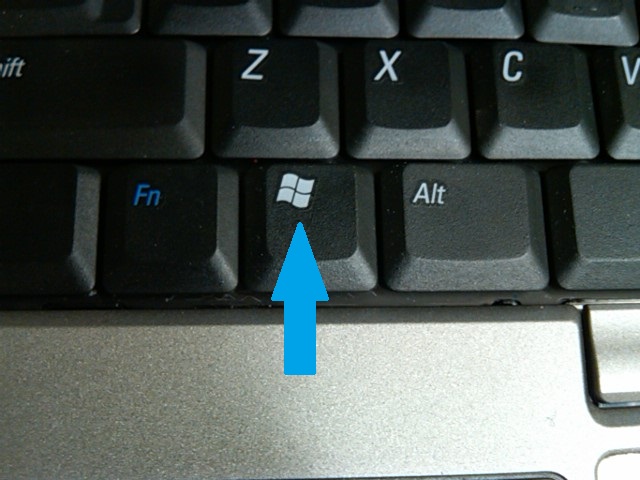
But others, like keyboard backlight brightness, have to be changed deep within the Settings app, whereas they could be changed with one or two taps on the MacBook Pro's Touch Bar or the MacBook Air's function keys. The Apple-made keyboard attachments for the various iPad models have no Touch Bar, and they lack function or media keys.
9to5Mac found references to new keyboard shortcuts for these types of tasks, but it was not able to activate them. Apple may be in the early stages of testing this feature, but there's no guarantee it will reach the public. And if it does, it might be in iPadOS 14 (due to be unveiled at WWDC later this month) and not iPadOS 13.5.5.That said, the lack of efficient alternatives to media keys has been a common complaint in recent iPad and iPad keyboard reviews across the Web, so we wouldn't be surprised if Apple prioritizes this.
AdvertisementBelow: The steps you have to take to change keyboard backlight brightness on an iPad with the Magic Keyboard peripheral, from our Magic Keyboard review. Photos of the keyboard from our review are at the top of this article as well.
In any case, 9to5Mac notes that the shortcuts will probably be customizable in its analysis, should the feature reach users.
Over the past couple of years, Apple has put in significant effort to make the iPad a more viable laptop replacement—most recently with the introduction of mouse and trackpad support. However, many limitations still remain, like the fact that external monitors are limited to mirroring the iPad screen's view rather than extending it to give the user more space in which to work.As noted above, Apple is almost certain to lay out its plans for iPadOS 14 at its virtual developer conference. That conference kicks off June 22.
Listing image by Samuel Axon