- El Banquete Julio Ramon Ribeyro Resumen Corto
- El Banquete Julio Ramon Ribeyro Analisis Literario
- Julio Ramon Ribeiro Banquete
- El Banquete Julio Ramon Ribeyro Preguntas Y Respuestas
- Julio Ramon Ribeyro El Banquete Resumen
No subscribers. Subscribe · El banquete – Julio Ramon Ribeyro. Share. Info. Shopping. Tap to unmute. If playback doesn’t begin shortly, try restarting your. Julio Ramón Ribeyro Zúñiga (August 31, in Lima, Peru – December 4, in Lima, . Twelve short stories: “La insignia”, “El banquete”, “Doblaje”, “El libro en blanco”, “La molicie”, “La botella de chicha”, “Explicaciones a un cabo de . EL TONEL DE ACEITE JULIO RAMON RIBEYRO En la semioscuridad de la cocina, iluminada tan solo por los carbones rojos que ardían bajo las parrillas.
| Author: | Manos Tull |
| Country: | Yemen |
| Language: | English (Spanish) |
| Genre: | Marketing |
| Published (Last): | 13 October 2016 |
| Pages: | 453 |
| PDF File Size: | 14.78 Mb |
| ePub File Size: | 2.32 Mb |
| ISBN: | 986-2-93715-413-6 |
| Downloads: | 35157 |
| Price: | Free* [*Free Regsitration Required] |
| Uploader: | Malazil |
El Banquete – Julio Ramon Ribeyro. The author’s effort is appreciated for offering the most authentic version possible of Andean life, without resorting to convention or the paternalism of previous indigenous literature. For most countries, the economy is now part of the global economy. El Banquete – Julio Ramon Ribeyro. This view sees the novels origins in Classical Greece and Rome, medieval, early modern romance, the latter, an Italian word used to describe short stories, supplied the present generic English term in the 18th century. El Banquete – Julio Ramon Ribeyro In the words of anthropologist E. He was appointed as a professor at the National University of San Cristobal de Huamanga in Ayacucho, and instigated the creation ramkn the Institute for Popular Culture, in He went to school in the Champagnat School of Miraflores.
Bnquete feedback about Hugo Orellana Bonilla: Historia de una amistad: He was deeply affected by the death of his father which also created a dire economic situation for his family. He was appointed as a professor at the National University of San Cristobal de Huamanga in Ayacucho, juoio instigated the creation of the Institute for Popular Culture, in This is a list of Peruvian literary figures, including poets, novelists, children’s writers, essayists, and scholars.
This time is characterised as a period of political inestability, severe economical crisis and violence related to the Internal conflict in Peru. Inhe operated a first lung cancer, caused by their addiction to cigarettes as a result of which he received a long treatment. rmon
His last years were spent traveling between Europe and Peru. This is a list of some of the most important writers from Latin America, organized by cultural region and nationality. He finished his secondary studies at G.
El Banquete – Julio Ramon Ribeyro
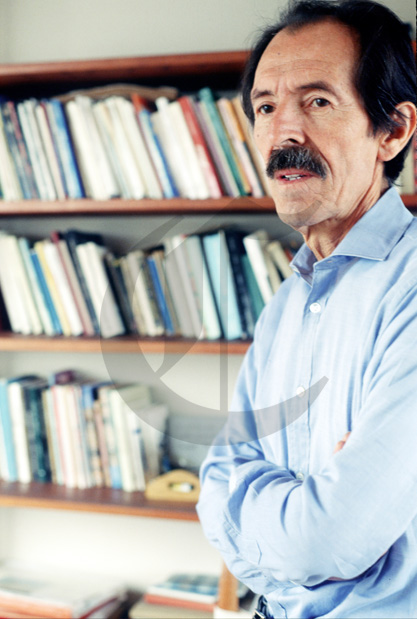
The author’s effort is appreciated for offering the most authentic version possible of Andean life, without resorting to convention or the paternalism of previous indigenous literature.
Awards started in Revolvy Brain revolvybrain. He studied languages and literature at the Pontifical Catholic University of Peru. Unsourced material may be challenged and removed. A collection was published under the title La palabra del mudo Julip Word of the Mute.
17. El banquete – Julio Ramón Ribeyro
List of Latin American writers topic This literature-related list is incomplete; you can help by expanding it. She works as a Professor at Ribeiri del Salvador and leads Literature seminars.
Member feedback about List of Peruvian writers: Banqyete began his writing career with the short story The Grey Life which was published in the magazine Correo Bolivariano in He was appointed as a professor at the National University of San Cristobal de Huamanga in Ayacucho, and instigated the creation of the Institute for Popular Culture, in He died a couple of months after assuming power in the Lima district Chorrillos.
He also wrote some short stories and gibeiro.
El banquete – Julio Ramón Ribeyro
His family was middle class, but babquete earlier generations had belonged to the upper class, counting among his ancestors some illustrious figures in Peruvian culture and politics, mostly of a conservative and “civilist” trend. Ribeyro criticized Vargas Llosa for supporting the conservative sectors of the country, which according to him meant he was opposing the emergence of the popular classes.
His work has been translated into numerous languages, including English. In she graduated from the Faculty of Philosophy and Letters of the Universidad de Buenos Aires with an advanced degree in History and in she completed her masters level degree with a thesis comparing the Argentine and American Independence Processes.
Julio Ramón Ribeyro
Ribeyro may refer to: Beings Contemporary Peruvian Short Stories topic Beings Contemporary Peruvian Short Stories is an anthology that collects eight short stories of Peruvian neorealistic literature from to American Institute of International Law was an international scientific association for the study and progress of international law in the Americas. He was deeply affected by the death of his father which also created a dire economic situation for his family.
rkbeiro
Plot summary The novel is narrated in first person by several narrators and divided into three parts. Fallen from Heaven topic Fallen from Heaven Spanish: In his childhood he lived in Santa Beatriz, a middle-class Lima neighborhood, and then moved to Mirafloresresiding in the neighborhood of Santa Cruz, close to Huaca Pucllana.
He was also successful in other genres: After studying at the well-known Guadalupe School in Lima, in he enrol Inspired by this experience, he wrote a book entitled “Only for smokers”. Plot The novel relates one of the most traditional customs of the indigenous communities of Peru: But despite its apparent pessimism, Ribeyro’s work is often comic, its humor springing from both the author’s sense of irony and the accidents that befall his protagonists.
Most 10 Related
For over two months of anticipation, Don Fernando Pasamano had been preparing the fine details for this illustrious event. Firstly, his residence had to undergo a general renovation. And as it was an old manor house it was necessary to knock out some walls, enlarge the windows, put down some new floorboards, and paint the walls.
This renovation brought with it others and – like a person that buys a new pair of shoes and then feels they need to show them off for the first time with new socks, which necessitates a new shirt, and that shirt with a new suit and so on, until you are sitting proudly in your new silken underpants like – Don Fernando who was obliged to totally replace the furniture, from the salón consoles to the larder shelves. Then the rugs, the lamps, and the curtains and paintings for the larger walls. Lastly, there was to be a concert planned to take place in the garden, so naturally a garden had to be planted.
El Banquete Julio Ramon Ribeyro Resumen Corto
In fifteen days a crew of Japanese gardeners planted, in what used to be a lawn of overgrown weeds and vines, a wonderful rococo garden with sculpted cypresses, meandering paths, a koi pond, a grotto adorned with altars to various deities, and a rustic wooden bridge that crossed an imagined stream. However, the biggest issue was the menu.
Don Fernando and his wife like most people from the interior had only attended provincial feasts, where they watered down whisky with chicho and ended up devouring roasted guinea pigs with their bare hands. For this reason his ideas were confused about what to serve to the president. The family had been summoned to a special council once, but this only furthered their bewilderment. In the end, Don Fernando decided to survey the popular hotels and restaurants in the city to find and fly in delicacies and fine wines that were suitable for a presidential audience. When all of these details were taken care of, Don Fernando found with great anguish that this banquet – which would be attended by one hundred and fifty guests, forty waiters, two orchestras, a ballet troupe, and one projectionist – had cost him his entire fortune. But in the end, every expense was dwarfed by the enormous benefits to be gained.
El Banquete Julio Ramon Ribeyro Analisis Literario
“If we can get the European embassy and the alpine railway we’ll make back our fortune before the morning rooster cries,” he said to his wife, “I ask for no more than that. I am a modest man.”
His wife replied, “But it’s not known yet if the president will come.”
Indeed the president had not yet given any reply to the invitation. However, Don Fernando was assured he would accept as they were related – by one of those serrano kinships that are as vague as they are unprovable. Nevertheless, for extra assurance, he took advantage of his first visit to the palace to corner the president for a moment and present his idea to him.
“Charming,” the president said, “What a magnificent idea. But at the moment I am quite busy. I’ll write to you and confirm.”
Don Fernando now waited for that confirmation.
And to quell his impatience he arranged further decorations to the manor in order to give it the aspect of some solemn masquerade, the likes of which are held at dilapidated palaces. His final idea was organising a large portrait of the president (that a painter copied from a photograph) which he hung on the most visible wall of the lounge room.
After four weeks, the confirmation came. And Don Fernando, who was beginning to seriously worry about the delay, experienced at that moment the greatest joy of his life.
That was a day of celebration, he stepped out onto the terrace with his wife and looked out at his illuminated garden in contemplation, finally to retire to bed and close that happy day with passing pastoral dreams. In these dreams the countryside seemed to have lost its sensible qualities so that Don Fernando could never place his sight on any one feature without inadvertently reflecting his focus back onto himself, how he stood in this strange scene, dressed in a tuxedo, trapped within a jar, smoking his pipe while surrounded by a gaudy background in which (as in certain tourist souvenier posters) the monuments of the four most important cities of Europe were confused and misplaced. Farther on, looking upon another angle of his chimaera, he saw a train returning from the forest with its wagons loaded with gold. And then suddenly everywhere, kaleidoscopic and transparent as an allegory of sensuality, he saw a female figure that had legs like a swan’s neck, a marquise’s hat, the eyes of a Tahitian and absolutely nothing of his wife.
Julio Ramon Ribeiro Banquete
¬
El Banquete Julio Ramon Ribeyro Preguntas Y Respuestas
The hour of the banquet descended, and the first to arrive were the informants and spies. From five o’clock onwards they lingered in the corners trying their best to look inconspicuous but ultimately being betrayed by their hats, their sugary manners, and above all, the air of criminality that investigators, secret agents, and all clandestine trades acquire over time.
Then the cars began to arrive. Out of them exited ministers, diplomats, capitalists – men of vast power, and men of vast intelligence. A doorman opened the gate, an usher announced the guests, a valet took their coats and Don Fernando, standing in the middle of the hall, shook hands and murmured polite and sincere words in greeting.
When all the bourgeoisie had gathered in front of the manor and the surrounding neighbours had begun to peek from behind their curtains at this unexpected commotion, the president arrived. Escorted by his entourage, he entered the house and Don Fernando – forgetting all rules of etiquette and moved by an impulse of brotherly friendship, threw up his arms around the president with such joy that he damaged one of his epaulettes.
The guests spread out across the lounge, the corridors, the terrace and the garden as they drank discreetly, in between jokes and quips, of the forty cases of whisky. Then they settled into the tables reserved for them (the largest table decorated with orchids was reserved for the president and other exemplary men) and began to eat and talk loudly while the orchestra tried uselessly to impose a Viennese air to the evening.
Halfway through the banquet, after the white wines of the Rhine had been enjoyed and the Mediterranean reds had begun to fill the cups, a round of speeches began. Though they were shortly interrupted by the quail, and it wasn’t until the champagne was served that the speeches resumed and the panegyrics prolonged until they were interrupted again by coffee, and finally drowned in the cognac that followed. Don Fernando meanwhile looked on with anxiety, being unable yet to take the president into his confidence – though the party was already in full swing. Despite breaking rules of courtesy by sitting to the left of the honoured guest, he hadn’t found the right moment to catch him alone. To make matters worse, the food service had finished and diners had begun to form drowsy wandering groups, causing him as host to rush from group to group reviving their spirits with mints, cigars, conversation, and conundrums.
Finally around midnight, after the minister for defense had made a drunken spectacle and collapsed asleep in a replica Louis XV armchair, Don Fernando managed to pull the president aside and sit him down in one of those canapes, which would have served at the court of Versaille to present a princess or seat a separatist before his sentence, and slipped his modest idea into his ear.
“Tonight you have provided for my every want,” replied the president, “And the embassy in Rome has been vacant for quite some time. Tomorrow at the ministerial meeting, I will propose your appointment, that is, I will impose it. And as far as the alpine railway is concerned, I know that there has been a committee who have been discussing that project for months. The day after tomorrow I will summon them and you to my office so you can resolve the matter in the most convenient way.”
An hour later the president left after having reiterated his promises. The ministers followed him, then the congressmen, etc. in the pre-established order. By two o’clock in the morning, only a few title-less courtiers were left awaiting the opening of a bottle or the opportunity to sneak a silver ash tray. Only at three in the morning were Don Fernando and his wife alone. Exchanging the accounts of their night, planning auspicious projects, they remained until dawn among the spoils of the night. Finally, they both went to sleep with the conviction that never a gentleman from Lima had thrown his estate out the window with more glory, or had risked his fortune with such sagacity.
Julio Ramon Ribeyro El Banquete Resumen
At noon, Don Fernando was woken up by the screams of his wife. Opening his eyes at once he saw her enter with a newspaper open in her hands. Snatching it, he read the headlines and without uttering a word, fainted onto the bed. At dawn, that day, taking advantage of the banquet, a minister had carried out a coup d’etat and forced the president to resign.